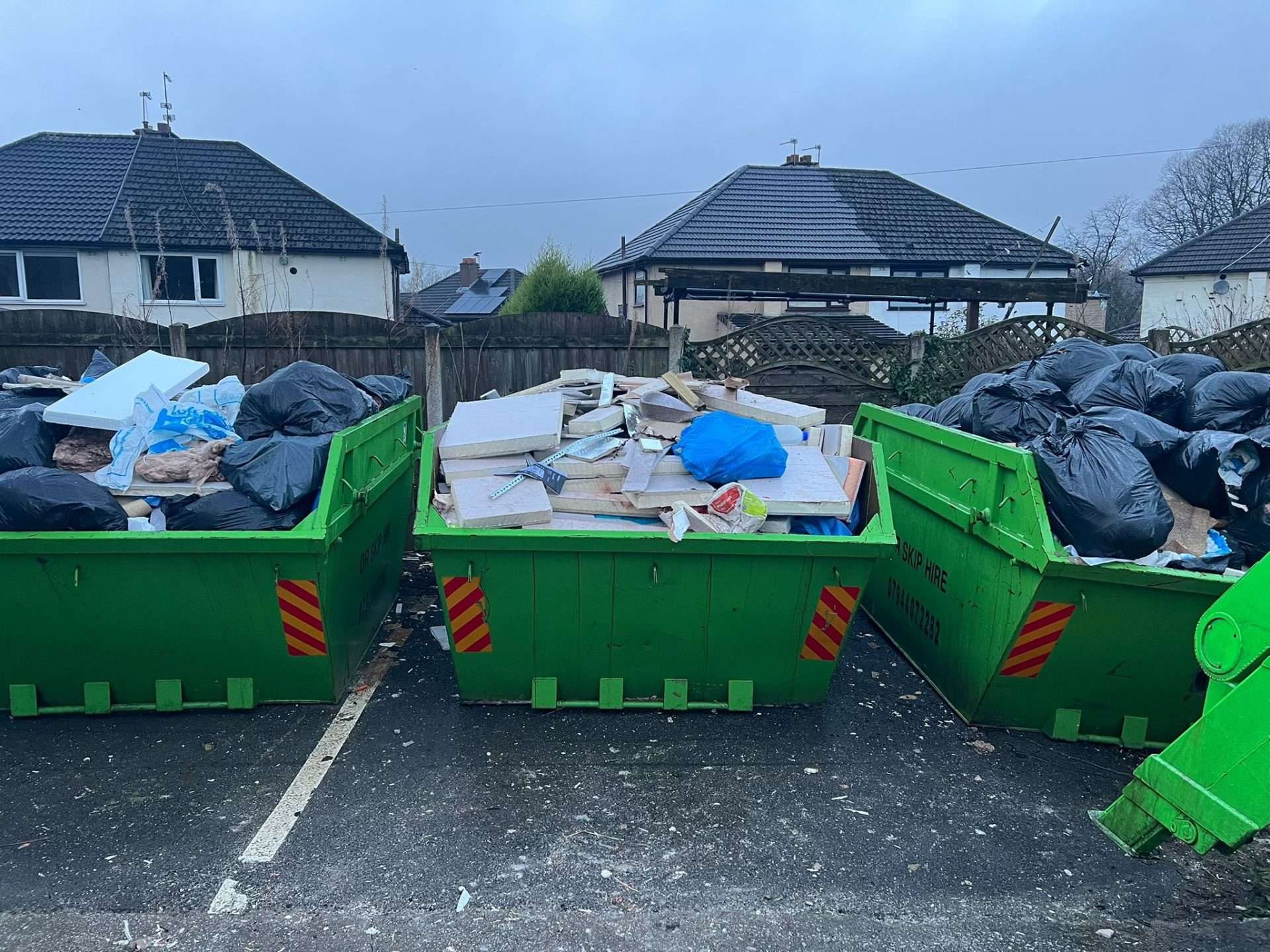
What Can and Cannot Go in a Skip?
A quick guide to what you can and cannot put in a skip.
Hiring a skip is a convenient way to deal with waste from a clear-out, renovation or garden project. However, not every material can be placed in a general skip. Knowing the rules before you begin helps protect people, prevents delays and avoids extra handling charges.
What can usually go in a skip?
Most ordinary, non-hazardous household and building waste can usually be accepted. Always describe the job when booking, because limits may depend on the skip size, weight and the way materials need to be processed.
- Household clutter and unwanted possessions
- Wood, untreated timber and broken furniture
- Metal items and empty metal fittings
- Plastic packaging and other non-hazardous plastics
- Cardboard, paper and empty packaging
- Garden cuttings, branches and leaves
- Soil or hardcore in 2 and 4 yard skips
- Up to 1 tonne of soil or hardcore in 6 and 8 yard skips
- Bricks, tiles and concrete, subject to the confirmed weight limit
- Bathroom and kitchen fittings
- Electrical goods, mattresses and fridges/freezers
- General renovation and construction waste
2 and 4 yard skips can be filled with soil or hardcore. A maximum of 1 tonne of soil or hardcore is allowed in 6 and 8 yard skips. Tell us about other dense materials before booking so we can confirm the safe loading arrangement.
What cannot go in a general skip?
Hazardous, pressurised and chemically active items normally need a separate collection or specialist disposal route. Lithium batteries are not accepted. Electrical goods, mattresses and fridge/freezers are accepted. Common restricted items include:
- Asbestos or materials suspected of containing asbestos
- Lithium batteries
- Gas bottles, cylinders and pressurised containers
- Paint, solvents, chemicals, oils and fuels
- Tyres
- Fluorescent tubes and some specialist lamps
- Clinical, medical or biological waste
- Plasterboard — extra charge and handling requirements apply
- Liquids of any kind
This list is a practical guide rather than a complete legal classification. If an item is not clearly ordinary household, garden or building waste, check before placing it in the skip.
Why are some items restricted?
Restricted items can contain substances that harm people or the environment. Some can cause fires during transport or processing; others must be separated so they can be handled under specific waste rules. Lithium batteries, chemicals and asbestos require more controlled treatment than general waste.
Do not overfill the skip
Waste should stay within the skip’s fill line and should not project above the sides. An overloaded skip may be unsafe to lift and transport. Loose objects can fall onto the road, while excess weight can damage equipment or make collection impossible. If you have more waste than expected, contact the provider before adding it.
Keep waste types separate when asked
Plasterboard incurs an extra charge. Please tell us before booking so we can confirm the cost and handling requirements. Explaining the project at the start makes it easier to choose the correct service.
What should I do with a restricted item?
Do not hide a restricted item beneath other waste. Set it aside and ask about an appropriate collection or disposal option. Your local council may provide routes for household hazardous waste, electrical equipment or batteries. Businesses should use authorised services and retain the relevant waste documentation.
Before your skip arrives
- List the main waste types from your project.
- Photograph anything you are unsure about.
- Estimate the volume without compressing unsafe materials.
- Check that the skip has a level, accessible position.
- Ask about permits if it may need to sit on a public road.
- Keep children and unauthorised people away from the skip.
DR Waste North West offers 2-yard to 8-yard skip hire across East Lancashire. We are registered with the Environment Agency under CBDU527673. Tell us what you plan to dispose of when requesting a quote so we can give clear guidance for the job.
Frequently asked questions
Can mattresses go in a skip?
Yes. Mattresses are accepted. Tell us what you have when booking so we can confirm the correct skip and loading arrangement.
Can plasterboard go in a skip?
Plasterboard incurs an extra charge. Please tell us before booking so we can confirm the cost and handling requirements.
Can electrical items go in a skip?
Yes. Electrical goods, including fridges and freezers, are accepted. Tell us exactly what you have when booking so we can confirm the correct handling.
Can I put paint tins in a skip?
Tins containing paint, solvents or other liquids should not go into a general skip. Even apparently empty containers should be checked first.
What happens if a restricted item is found?
The skip may be refused for collection, or the item may need separate handling and additional charges. The safest approach is to ask before loading.